Deprecated: Function WP_Dependencies->add_data() was called with an argument that is deprecated since version 6.9.0! IE conditional comments are ignored by all supported browsers. in /home/acroasis/public_html/wp-includes/functions.php on line 6170

Deprecated: Function WP_Dependencies->add_data() was called with an argument that is deprecated since version 6.9.0! IE conditional comments are ignored by all supported browsers. in /home/acroasis/public_html/wp-includes/functions.php on line 6170

250 and Counting: March 7, 1775

Topsfield, Massachusetts wanted to be prepared when the British came. What’s more, they wanted to ensure that their militiamen were drilled and fully outfitted should the need arise. To that end, they offered some of the best wages for their Minutemen.

But they had some trouble recruiting at first, until the town’s selectmen decided that their initial force wasn’t nearly formidable enough.

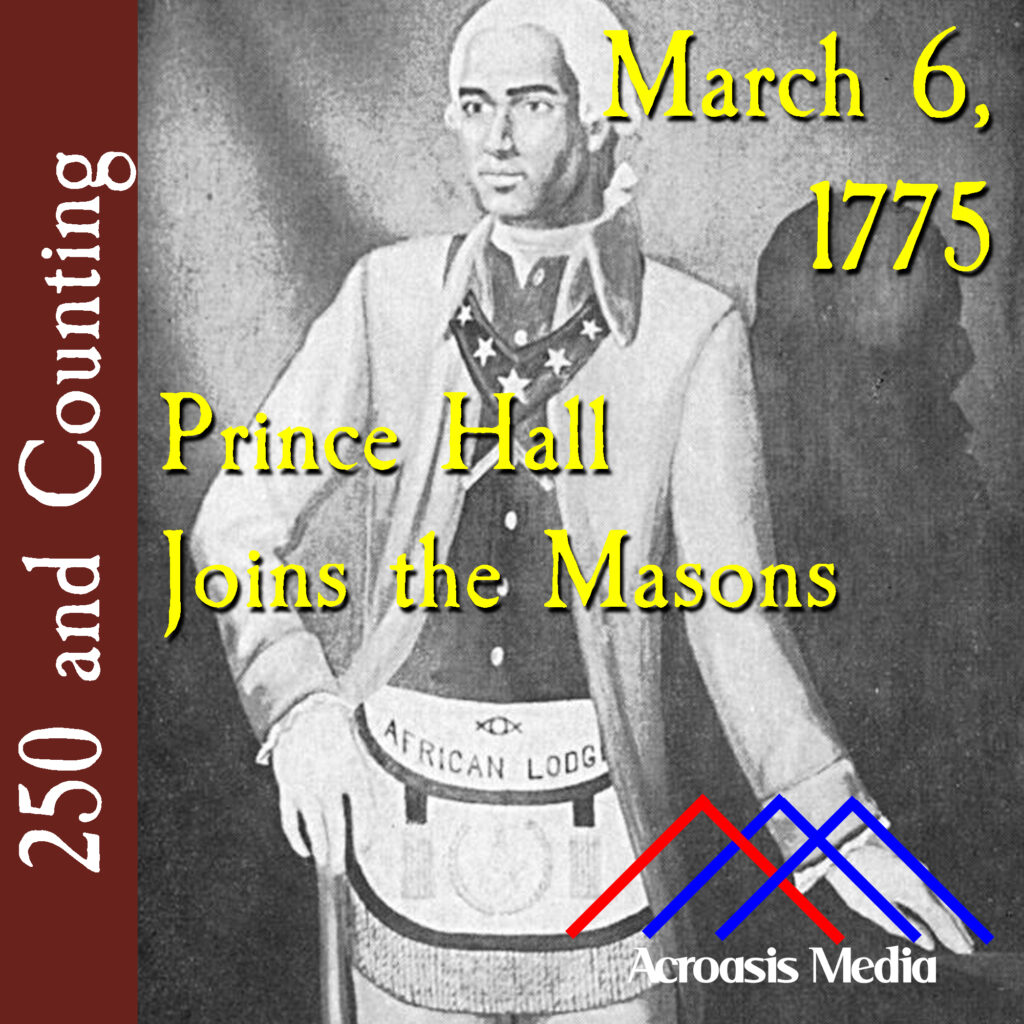
250 and Counting: March 6, 1775

Prince Hall, who appears in today’s artwork in an undated and unattributed picture, became interested in becoming a Mason but was turned down because of his race. The British Masons, however, were perfectly willing to accept Blacks into their ranks…so long as they fought on the British side of the Revolution.

It wasn’t long before the Americans caught on to the scheme and reversed their decision. But Hall wasn’t done with simply joining the Freemasons. He had additional ambitions for himself, and others who looked like him.

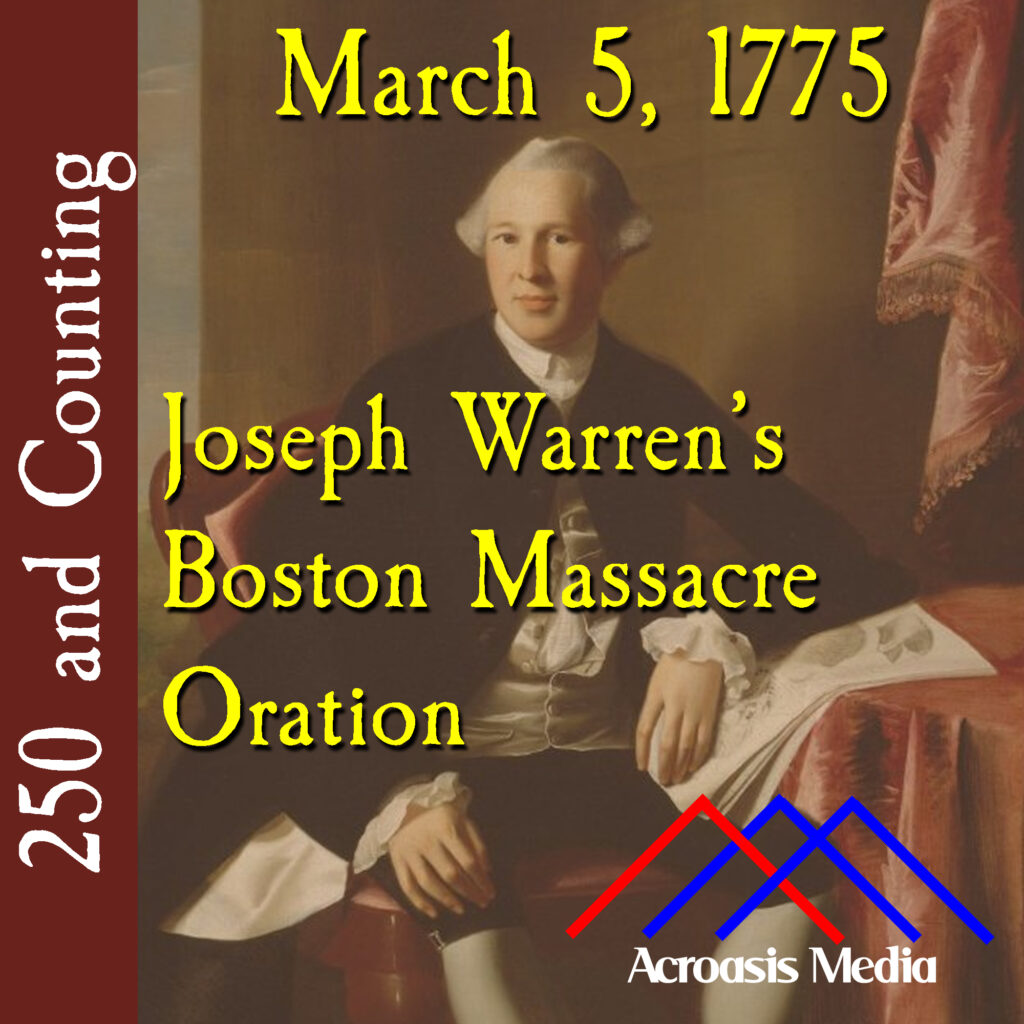
250 and Counting: March 5, 1775

Joseph Warren’s life as a Patriot was rather brief (in fact his life overall was relatively short), but it was quite important to the cause. Warren was part of the committee that investigated the Boston Massacre, he sent Paul Revere on his midnight ride (just go with it for now), he wrote a song called “Free America,” which was based on a British melody called “The British Grenadiers”, he fought at Lexington and Concord, and he died at Bunker Hill.

And he was one of only two men who was asked to speak more than once on the anniversary of the Boston Massacre. And this second time was the one that really sold the crowd.

250 and Counting: March 4, 1775

The Powell Family was a prominent one in the Loudoun County, Virginia area. It’s about due west of Washington, DC. If you’ve ever been anywhere between Leesburg and the Appalachian Mountains in Virginia, you’ve been to Loudoun County.

The Powells were among the first to fight for Virginia during the American Revolution, and as the Thirteen Colonies broke away and became the United States, they found themselves with a sense of noblesse oblige and took to representing their area in the political arena. Today we celebrate one of that family, a man born on this day in 1775.

250 and Counting: March 3, 1775

The Gunpowder Incident was an event that took place on April 21, 1775, so there won’t be much about it today. But that was the event that pushed Virginia deeply into the movement toward independence, and allowed the Continental Congress to finally consider seriously the idea of formally breaking away from England.

But it was an event that took place on this day— that barely got any notice at the time—which ultimately led to the Gunpowder Incident.

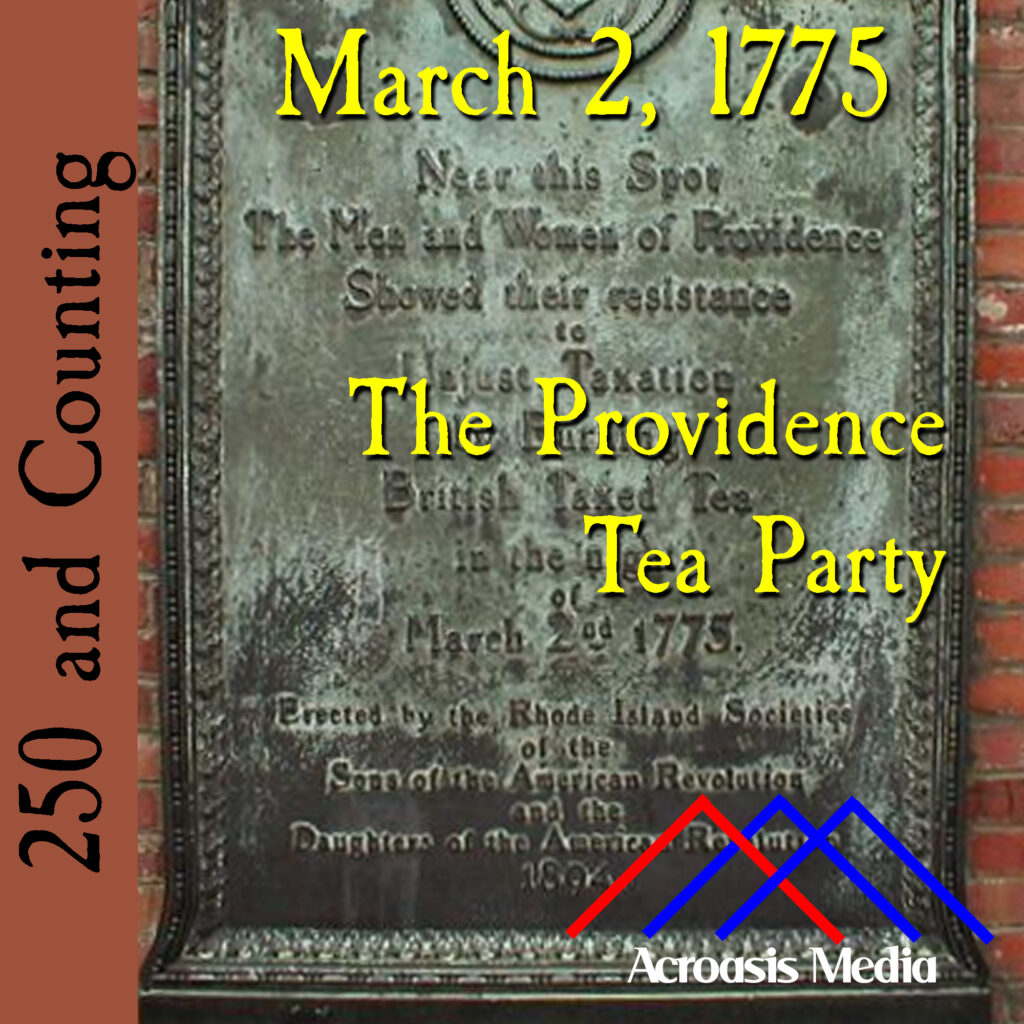
250 and Counting: March 2, 1775

As we noted yesterday, there were all kinds of abuses of tea going on in the Colonies. It (mostly) started with the Boston Tea Party, but also spread to other areas as well. The Boston Tea Party was notable for being a literal destruction of unsold tea, removing it from the market.

Other tea parties and actions largely involved tea that had already been purchased in the Colonies, either in the form of boycotts (as in the Edenton Tea Party), or in the form of destroying tea from one’s own pantry as a form of protest, as was the case in today’s episode. As noted during yesterday’s show, the Thirteen Colonies didn’t have enough economic clout to make a meaningful impact; they were meant to be symbolic in nature. But the British took these things seriously enough that their actions demonstrated they were looking for a fight rather than trying to avoid it.

250 and Counting: March 1, 1775

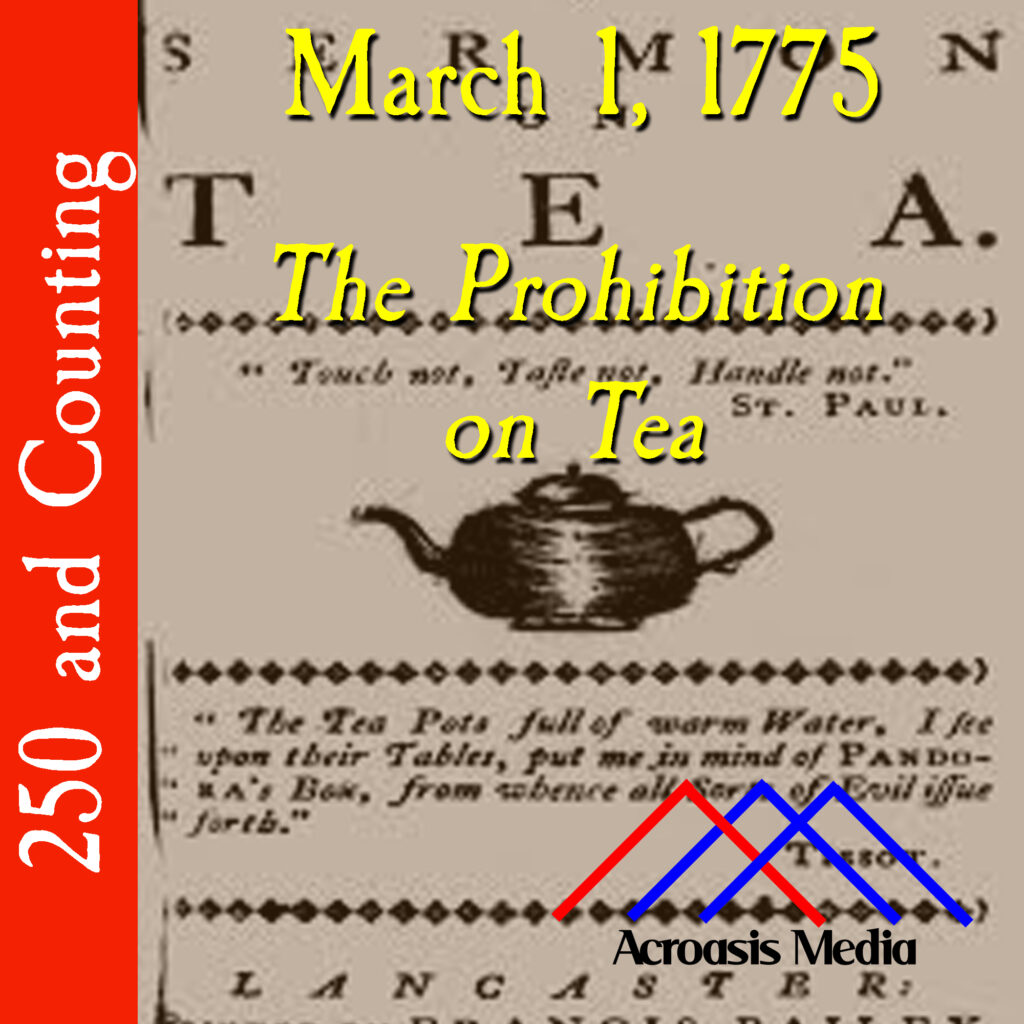
When it comes to tea-related protests, the Boston Tea Party seems to get all the press, even though there was also wanton destruction of tea in Charleston, and then there was the Edenton Tea Party.

But Boston was the first, and abusing tea in one way or another became a popular way to demonstrate your patriotism. (Some modern-day Brits would argue that we never quite stopped abusing tea.)

Today we talk about an effort to actually prohibit the import or consumption of tea in the Colonies. It worked about as well as you’d expect.

250 and Counting: February 28, 1775

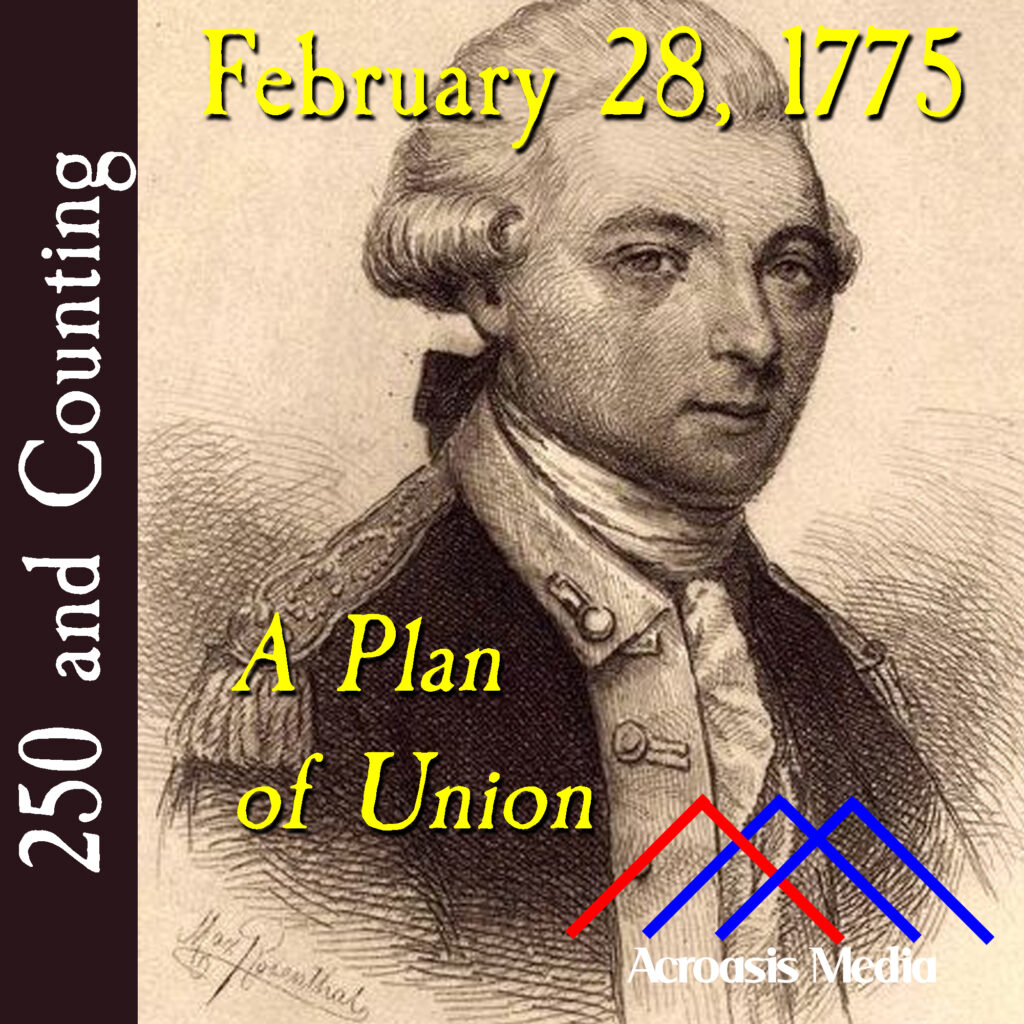
Today we meet yet another prominent citizen who thought he had the solution for putting an end to the tension between the Thirteen Colonies and Great Britain.

It’s important to note at this point, we think, that these people weren’t delusional; they were genuinely interested in maintaining a good relationship and therefore invested in repairing the damage that had been done. They liked being British citizens, even though a minority percentage of them had emigrated from England (many were born here; others came from different nations). And it’s also worth noting that when it came to separating from the British Empire…well, that sort of thing had never been done before. Never. So creating an entirely new nation was practically inconceivable for some people.

Unfortunately in the end, while Joseph Galloway’s plan was seriously considered by the Continental Congress, it was turned down, and there was an unfortunate series of events that forced him to leave America forever.

250 and Counting: February 27, 1775

nd once again, we have someone (two someones, really) who manage to come up with a plan that will put all this unpleasantness between the Thirteen Colonies and the British Empire to rest, and once again the physical distance between the two threatens the success of those plans.

What’s more, it turns out that the more popular of the two plans has an almost-hidden ulterior motive…

250 and Counting: February 26, 1775

It’s one thing to hear someone hollering “The British are coming!” and quite another to actually see them arriving in your port. And that’s especially true when they’re also seen confiscating the cannons that you’d hidden upriver.

This wasn’t the first time something like this had happened, but there was something different about the Colonists’ response—and it almost touched off the war nearly two months before it actually did.